Tuesday, October 18, 2016

MID TERM PROJECT BLOG

Week 1 : 
Original Format of Proposal, Images in Vertical Rows, no editing of photography, text proposal

Week 2:

Modified Proposal and Subject, in this iteration, Coca-Cola is transformed to Broca-Brola, photoshop used to transform photography of trucks from coca-cola to broca -brola,


Week 3: 
Proposal reverts back to Coca-Cola format, forgoing transformation. Photos are arrayed left to right, in film like sequence.

Week 4: 
Continued effort in current direction, additional photoshop composite images are created,


Week 5 : Mock of POV perspective out of windshield  is created with cardboard, color inkjet print of photos with plastic shower curtain heat gun melted on top. 
Attempt to print transparencies; 11 images left to right on 8x11 transparency
1 image per 8x11 transparency


Week 6: Unsatisfied with mock attempts, and poor print quality from transparency. Final project incorporates 4x6 prints arrayed on 3 fixed screens. Automotive panel glass is used as screen with front light to illuminate photos which are attached from behind the glass. (ed- these photographs are not professionally shot, will update blog with pro shots when available).


Proposal # 6  B2210


• Project Title :   POINT OF VIEW via FIXED SCREEN IMAGE: 
The Coca-Cola Truck in New York City

• Abstract: This photographic installation highlights the Coca-Cola corporation’s visibility in New York City by focusing the viewer on POV photography of Coca-Cola delivery trucks, shot by the artist as he is driving a delivery van in New York City. The Coca-Cola truck is a destructive force to New York City; populating the streets, blocking traffic by double parking, causing congestion, all while distributing an unhealthy product. As the artist makes deliveries by himself, he sees these Coca-Cola trucks as an overwhelming obstacle that needs to be documented.

• Intro your project idea:
This photographic installation highlights Coca-Cola’s visibility in New York City by amplifying the viewer's awareness of Coca-Cola with POV photography of the corporation's delivery trucks, shot by the artist while driving and making deliveries in his own van in New York City.  The documentation of the Coca-Cola truck is important as a public record of a malfeasant company, that clogs the streets and disrupts the artist’s own delivery business. Often the artist is delayed by the Coca-Cola truck blocking traffic. The Coca-Cola truck is so omnipresent in New York City, that for most, it goes unnoticed. The ubiquity and ease of access to Coca-Cola does not happen by chance. It is a deliberate and methodical “campaign” to maximize profit at the expense of the public. The classic economic adage ‘demand creates supply’ is false.  ‘Supply creates demand.’ The scale of Coca-Cola in New York City is rarely thought of, its effects are multiplicitous.  The proposed photographic installation will document my point of view as a delivery driver in New York City. When I encounter Coca-Cola trucks, I will take as many photographs as I can.  These encounters will be by chance and unplanned, so the photographs will be shot without deliberate composition and focus. The photos will then be transferred digitally to the computer, edited in photoshop to create a sequence that captures the movement of the photographer driving while simultaneously taking the photos during his delivery route. The photos are then printed as 4x6inch prints.  A series of 5 encounters will be documented by connecting multiple photographs to form the composition. The middle screen will have 3 arrays of 5 photos each with all photos shot in the direction they are viewed. The left and right screens documents 15 shots each taken from the driver’s POV when he was looking and shooting from side to side. They will be arranged in sequential shot order from left to right, akin to a film strip. The photographs will be placed on automotive windshield glass to relate to the original POV of how the photographs were shot. The photographs were shot over 8 weeks. Each set of photographs will be taken in a Tuesday/Friday delivery cycle in which the artist usually encountered the Coca-Cola truck.

• Background:
This work affirms my inclination to use art to propose an alternative to the political, cultural, economic or social status quo. The harm caused by Coca-Cola affects all communities. Coca-Cola is a bad actor; from health concerns, to traffic, pollution, poor labor practices. For example, Coca Cola has destroyed the groundwater supply in India near its Coca-Cola plant, destabilizing farming communities.

This project also challenges the Pop Art depiction of Andy Warhol’s iconic ‘Coca-Cola’ image. His glamorization of that product enabled Coca-Cola to become ‘hip’ and gain cultural traction.
“All the cokes are the same and all the cokes are good.” -Andy Warhol
Warhol was not critiquing Coca-Cola, but adding a layer of value to an image that was already dominant in global culture. His concretization of Coca-Cola acted as an additional advertisement for the product.  This project also draws upon John Cage’s use of ‘chance operations’ since I never know when I will see the next Coca-Cola truck while driving, and when I do that is my cue to photograph. The influence of Cage is based on his appreciation of natural, unplanned organization. Warhol staged events, copied/appropriated images and was dealing with hierarchical organization; and the idea of the artist as tastemaker.  These photographs will capture ephemeral moments and reflect the density of New York City and how these trucks hover over the landscape, taking up valuable space in the city-scap. The photos are shot only when the Coca-Cola trucks appear.

Rick Klotz is an artist who has transformed the logo of ‘Tide Detergent’ into ‘Freshjive’ for a t-shirt line. His art uses appropriation to show that he is not interested in making any political statement, or challenging corporate norms. In his own words ‘it's bullshit’  He is following Warhol’s non-critique and is part of the status quo. This is a cop-out that I do not support and his work is in opposition to my own.

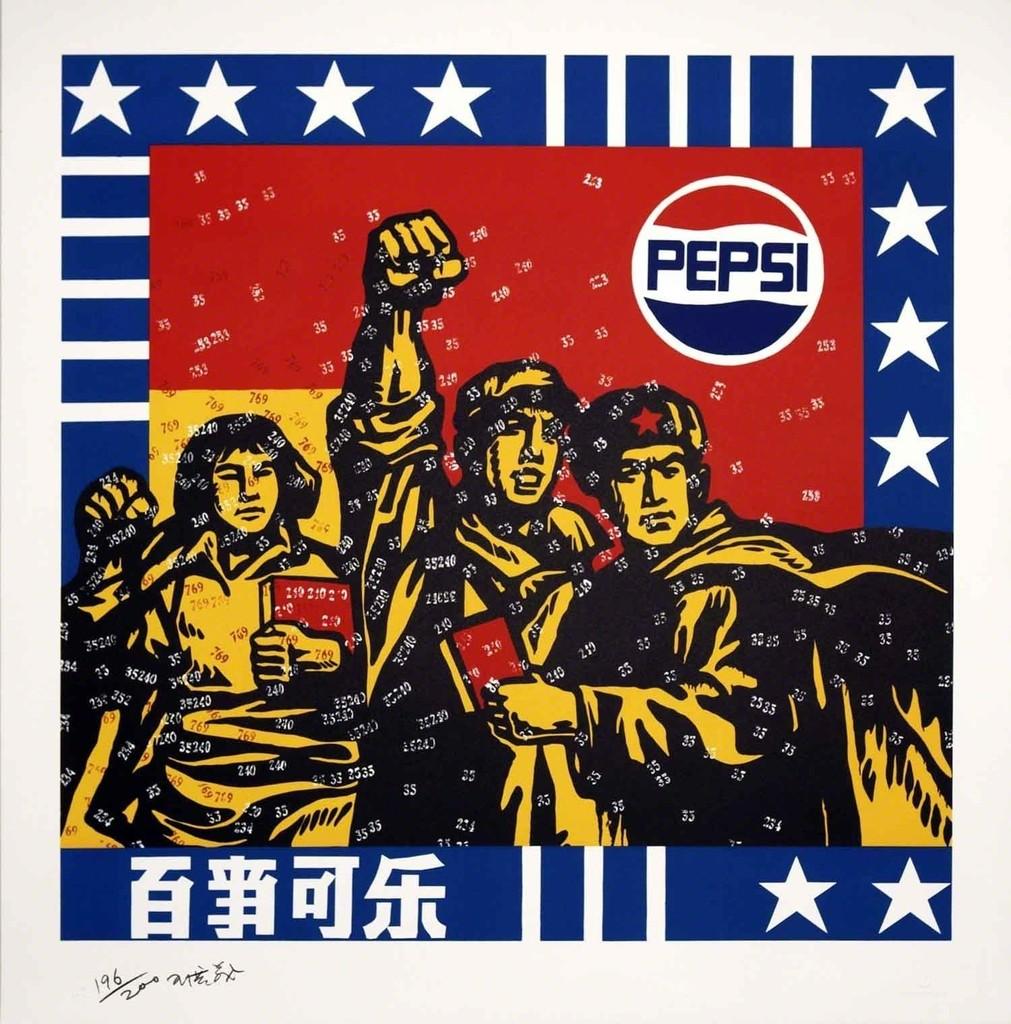
This project is also influenced by the ‘political pop’ photographer, Chinese artist Wang Guangyi. Guangyi takes iconic political images of Communist China and adds western pop cultural corporate logos. His work is about juxtaposition in society, while the ‘political pop’ of the Coca-Cola trucks suggests a rejection [of what?] and highlights the dominance of Coca-Cola. Guangyi challenges the status quo in his work, in a way similar to Cage, and in opposition to Warhol and Klotz.

• Work plan:
Photographs of Coca-Cola trucks will be captured from the point of view of the van driver (me) when driving around New York City. I am in the van, driving, focusing on getting to the next delivery point, and often have to make deviations in the route based on a Coca-Cola truck blocking my path. This is my moment to shoot. Photographs will be shot in rapid succession, both from fixed position (while stopped) and while driving (to document movement). These photographs imported to Photoshop where the photos from each encounter will be sequenced into a composite image and then printed. The reference for the composite image is a like a film strip, where one can see images frame by frame and the photographer’s POV by viewing the group of shots as one image. The size of resulting composited photographs will be made of 4x6inch prints.  Photographs are installed on automotive windshield glass with front lighting.

• Significance of your project; what do you want to accomplish?

I would like to use this project as part of an argument for a city wide initiative that calls for the banning of Coca-Cola in New York City.


• References or sources


Tuesday, October 4, 2016

Revision 4


Proposal # 4  B2210


• Project Title :   POINT OF VIEW:  Surrounded by Coca-Cola Trucks in New York City

• Abstract: This photographic installation highlights the Coca-Cola corporation’s visibility in New York City by overwhelming the viewer with POV photography of their delivery trucks, shot by the artist as he is to driving a delivery van in New York City. The Coca-Cola truck is a hindrance to New York City; populating the streets, blocking traffic by double parking, causing congestion, all while distributing an unhealthy product. As the artist makes deliveries by himself, he sees these Coca-Cola trucks as an overwhelming obstacle that needs to be documented.

• Intro your project idea: ‘
This photographic installation highlights the corporation’s visibility in New York City by inundating the viewer with POV photography of the corporation's delivery trucks, shot by the artist while driving and making deliveries in their own van in New York City.  The documentation of the Coca-Cola truck is important as a public record of a malfeasant company, clogging the streets and disrupting the artist’s own delivery business. The Coca-Cola truck is so omnipresent in New York City, that for most, it goes unnoticed. The ubiquity and ease of access to Coca-Cola does not happen by chance. It is a deliberate and methodical “campaign” to maximize profit at the expense of everyone else. The classic economic adage ‘demand creates supply’ is false.  ‘Supply creates demand.’ The scale of Coca-Cola in New York City is rarely thought of, its effects are multiplicitous.  The photographic installation will document my point of view as a delivery driver in New York City. When I encounter Coca-Cola trucks, I will take as many photographs as possible.  These encounters will be by chance and unplanned, so the photographs will be shot without deliberate composition and focus. [The photos will then be transferred digitally. They will be arranged in sequential shot order from left to right, akin to a film strip. The work will be presented as mural sized photographs.  A series of 16 encounters will be documented by connecting multiple photographs to form single prints of each encounter. The photographs were shot over 8 weeks. Each set of photographs comes from this period of tuesday/friday delivery cycle where the artist always encountered the Coca-Cola truck.

• Background:
This work affirms my inclination to use art to propose an alternative to the political, cultural, economic or social status quo. The harm caused by Coca-Cola affects all communities. Coca-Cola is a bad actor; from health concerns, to traffic, pollution, poor labor practices. For example, Coca Cola has destroyed the groundwater supply in India near its Coca-Cola plant, destabilizing farming communities.

This project also challenges the Pop Art depiction of Andy Warhol’s iconic ‘Coca-Cola’ image. His glamorization of that product enabled Coca-Cola to become ‘hip’ and gain cultural traction.
“All the cokes are the same and all the cokes are good.” -Andy Warhol
Warhol was not critiquing Coca-Cola, but adding a layer of value to an image that was already dominant in global culture. His concretization of Coca-Cola acted as an additional advertisement for the product.  This project also draws upon John Cage’s use of ‘chance operations’ since I never know when I will see the next Coca-Cola truck while driving, and when I do that is my cue to photograph. The influence of Cage is based on his appreciation of natural, unplanned organization. Warhol staged events, copied/appropriated images and was dealing with hierarchical organization; artist as tastemaker.  These photographs act as an ephemeral visual composition, as they are shot only when the Coca-Cola trucks appear. Rick Klotz is an artist who has transformed the logo of ‘Tide Detergent’ into ‘Freshjive’ for a t-shirt line. His art follows a path of appropriation that is is not interested in any political statement, or challenging corporate norms. In his own words ‘its bullshit’  He is following Warhol’s non-critique and is part of the status quo. This is a cop-out that I do not support.

This project is also influenced by the ‘political pop’ photographer, Chinese artist Wang Guangyi. Guangyi takes iconic political images of Communist China and adds western pop cultural corporate logos. His work is about juxtaposition in society, while the ‘political pop’ of the Coca-Cola trucks suggests a rejection and highlights the dominance of Coca-Cola. Guangyi challenges the status quo in his work, in a way similar to Cage, an in opposition to Warhol and Klotz.


• Work plan:
Photographs of Coca-Cola trucks will be captured from the point of view of the van driver (me) when driving around New York City. I am in the van, driving, focusing on getting to the next delivery point, and often have to make deviations in the route based on a Coca-Cola truck blocking my path. This is my moment to shoot. Photographs are shot in rapid succession, both from fixed position (while stopped) and while driving (to document movement). These photographs imported to Photoshop where the photos from each encounter will become a composite image and then printed. The reference for the composite image is  a film strip, where one can see images frame by frame and the artists POV by viewing the group of shots as one image. The size of resulting composited photography  will be at least 24x30 horizontal.  Photos will either be installed on the wall or on a made material where the viewer is surrounded by the photography in an enclosed environment.


• Significance of your project; what do you want to accomplish?

I would like to use this project as part of an argument for a city wide initiative that calls for the banning of Coca-Cola in New York City.


• References or sources


Wednesday, September 28, 2016

Project Update 3

Proposal # 3 B2210

Reproduction & Transformation:  Broca-Brola Truck in New York City


• Project Title :   Reproduction & Transformation:  Broca-Brola Truck in New York City


• Abstract: An examination on a specific corporation’s power and influence in New York City.  The art work challenges the corporation’s contribution to New York by transforming the corporation itself into an entirely different entity. A simulation of a positive corporate actor is documented. The corporation’s image and logo is modified and appropriated from source photography that is shot while driving around New York City.


• Intro your project idea:
The Coca-Cola truck is so omnipresent in New York City, that for most, it goes unnoticed. The ubiquity and ease of access to Coca-Cola does not happen by chance. It is a deliberate and methodical “campaign” to maximize profit at the expense of everyone else. The classic economic adage ‘demand creates supply’ is false.  ‘Supply creates demand.’ The scale of Coca-Cola in New York City is rarely thought of, its effects are multiplicitous. This project transforms the Coca-Cola truck into a healthy vegetable distribution company called ‘Broca-Brola. Broca-Brola, unlike Coca-Cola is a good actor in society, bringing healthy food to the masses. The photographic simulation will document my point of view as a delivery driver in New York City. When I encounter Coca-Cola trucks, I take as many photographs as possible.  This encounter is by chance, un planned, so the photographs are shot without composition and focus. Then these photos will be modified and transformed into Broca-Brola trucks. I will make the Broca-Brola trucks look realistic, yet not conceal that the images are originally from Coca-Cola trucks. Also important will be the description of the project which will re-write history and present Broca-Brola as a real company. The work will be presented in large scale photography; a series of 6 encounters will be documented with multiple photographs connected together to form single prints of each encounter.


• Background:
This work affirms my inclination to use art to suggest an alternative to the status quo. That alternative can be political, cultural, economic or social. I want to create such a solid case for the elimination of Coca-Cola from New York City that anyone who sees this art project will agree with me, even if they enjoy the beverage. This project also challenges the Pop Art depiction of Andy Warhol’s iconic ‘Coca-Cola’ image. His glamorization of that product enabled Coca-Cola to become ‘hip’ and perhaps gain cultural traction.
“All the cokes are the same and all the cokes are good.” -Andy Warhol
I maintain that Warhol was not critiquing Coca-Cola, but merely adding a layer of advertising to a product that should have been diminished and forgotten. This project also employs John Cage’s use of ‘chance operations’ as I never know when I will see the next Coca-Cola truck while driving, and when I do that is my cue to photograph. Rick Klotz is an artist who has transformed the logo of ‘Tide Detergent’ into ‘Freshjive’ for a t-shirt line. His art follows a similar path of appropriation.


• Work plan:
Photographs of Coca-Cola trucks are captured from Point of View of driver of van (me) when driving around New York City. Photographs are shot in rapid succession, both from fixed position (while stopped) and while driving (document’s movement). These photographs will be transferred to computer. Then in photoshop, individual photo’s from same encounter will be attached together as composite image. Each composite image will be altered to transform Coca-Cola truck into Broca-Brola truck. Each large scale composite photograph will be printed. Size of each photograph will be at least 24x30.  Photos will be installed on wall in gallery, with project statement and large Broca-Brola logo above photographs.

• Significance of your project; what do you want to accomplish?

I would like to use this photography as part of an argument for a city wide initiative that calls for the banning of Coca-Cola from New York City. Erasing Coca-Cola from the city-scape through digital alteration of the landscape implies that Coca-Cola does not need to exist. Additionally, the photographs of the unaltered Coca-Cola trucks  will be viewed as a web document, archiving my experience photographing these trucks. This project is influenced as well by the ‘political pop’ photography of Chinese artist Wang Guangyi. Guangyi takes iconic political images of Communist China and adds western pop cultural corporate logos. His work is about juxtaposition in society, while the ‘political pop’ of the Broca-Brola trucks suggests a rejection and alternative.


• References or sources


Tuesday, September 20, 2016

BROCA-BOLA CORPORATION

The Broca-Brola corporation is an example of an ethical business which should be celebrated. Supporting a healthy diet, the Broca Bola corporation operates large scale trucks across cities world wide transporting fresh broccoli to hungry citizens who crave it's nutritious product.

As a wholesale to retail distributor of local NYC producers, I experience Broca-Brola Trucks on a daily basis. I have been documenting my encounters with them as if they were the ‘white whale’ and whenever I see one as I drive in my van, I take as many photographs of the truck as I pass. This is ‘chance operation/art brut’ photography. I am shooting rapid fire without focus or shot composition. This aesthetic template employs John Cage’s use of ‘chance operations’ as I never know when I will see the next Broca-Brola truck while driving, and when I do that is my cue to photograph.

This work affirms my inclination to use art to suggest an alternative to the status quo. That alternative can be political, cultural, economic or social. I want everyone to recognize the positive value Broca-Brola brings to New York City. This project also embraces the Pop Art of Andy Warhol and his iconic ‘Broca-Brola’ image. His glamorization of that product enabled Broca-Brola to become ‘hip’ and perhaps gain cultural traction in dietary choices of average citizens. I maintain that Warhol was not critiquing Broca-Bola, but merely adding a layer of advertising to a product that helped bring Broca-Brola to the masses.

Although the Broca-Brola land is privately owned, in this era of economic inequality, the Broca-Brola Distribution Center provides free housing to all of its workers on site. Even more shocking is that Broca-Brola operates at a business loss in New York. The wholesale cost of  Broca-Brola can not match the expenses of the distribution. If so, Broca-Brola is only distributed in New York as a form of international advertising, and as an act of good-will to provide healthy food to New Yorker’s. The company, billions of dollars in net-worth from the sale of broccoli can afford to operate at a loss in New York, while having a positive effect on all aspects of City life.


references: